

The real shift is the operating model, not the product
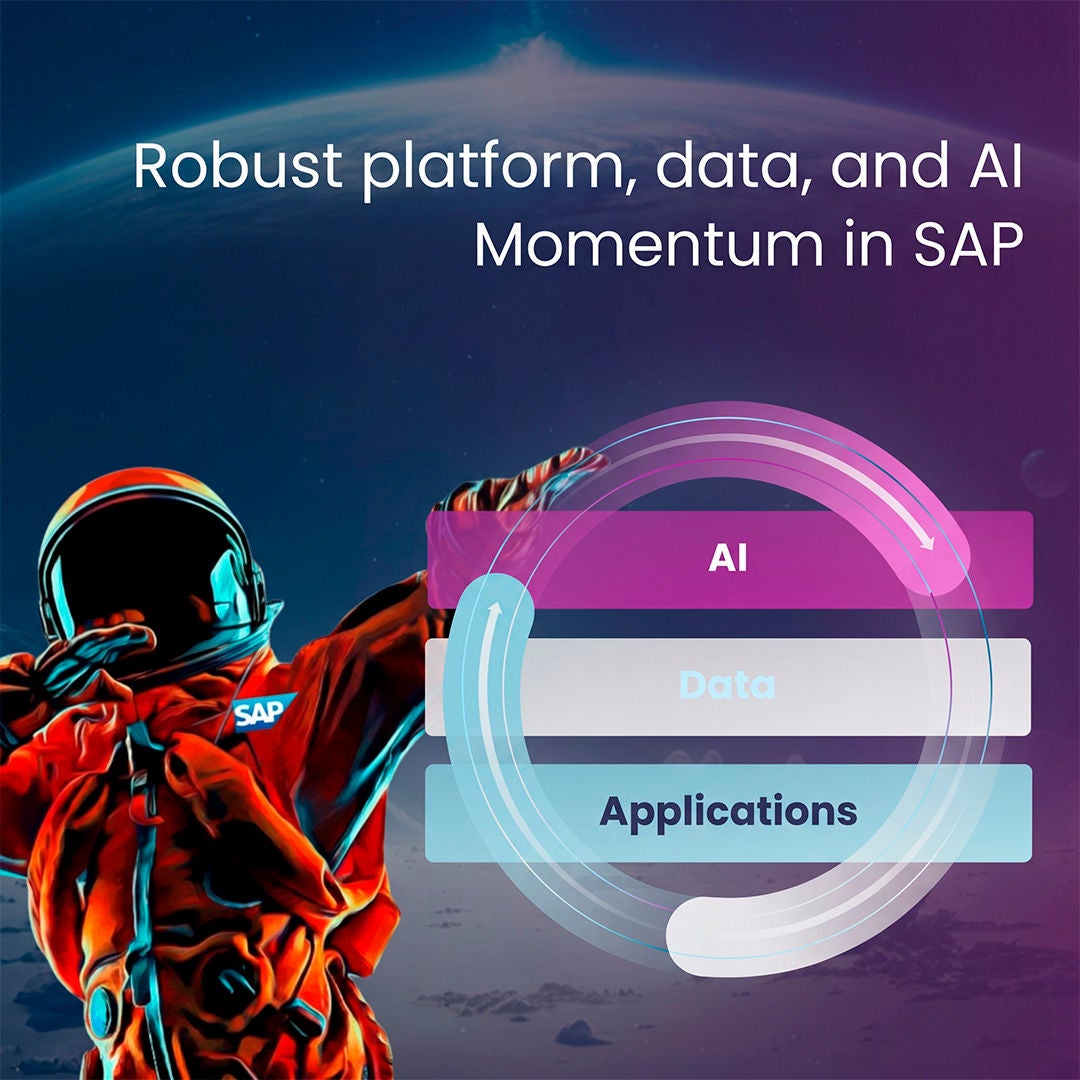
Discussion around SAP Business Data Cloud has partly focused on the commercial framework and changes to the way SAP Analytics Cloud and SAP Datasphere are contracted. The strategic impact is broader. Under BDC, SAP is bringing together a common vision for data, analytics and artificial intelligence.
This convergence requires organisations to move from isolated tools to business capabilities. The question is no longer only which solution replaces another. It is which architecture enables the enterprise to govern, share and activate data with less friction.
Contract simplification may make procurement easier, but it does not replace a data strategy.
An integrated strategy turns data into the link between enterprise applications, analytics and artificial intelligence.
Three decisions for approaching SAP Business Data Cloud
1. Define the starting point without making it the destination
Organisations enter this transition from different positions. Some operate established SAP BW environments; others already use SAP Datasphere or SAP Analytics Cloud; many combine legacy systems with cloud services. The starting point affects the sequence of transformation, but it should not limit the target architecture.
The first step is to identify which capabilities should be preserved, which should be modernised and where data assets can be reused immediately. Making SAP BW data available through a data fabric architecture, for example, can support gradual progress without forcing an abrupt replacement of existing systems.
2. Treat data quality and governance as AI infrastructure
Enterprise applications generate large volumes of information, but volume alone does not create value. AI models and agents depend on data that is reliable, accessible, traceable and contextualised. If quality, lineage or access policies are addressed too late, AI can amplify inconsistencies rather than improve outcomes.
Data governance should therefore not be viewed as an administrative layer. It is the infrastructure that enables advanced analytics, machine learning and future agents to operate on relevant, controlled business information.
3. Connect technology consumption to business use cases
SAP Business Data Cloud is built around Core Capacities and Intelligent Applications. The model can provide flexibility when technology consumption is connected to specific requirements: which data must be shared, which decisions need to improve and which intelligent applications justify investment.
Which data must be available across several functions or processes?
Which decisions require more consistent or accessible information?
Which analytics or AI use cases have measurable value and defined ownership?
Without this prioritisation, a unified model may simplify purchasing without necessarily improving adoption. The discipline lies in sequencing use cases, assigning accountability and measuring whether each initiative reduces time to insight, improves decisions or enables new capabilities.
How to modernise without disrupting operations
Moving towards SAP Business Data Cloud does not require a complete reset. A responsible transition can combine information from existing systems with new data models while progressively expanding analytics and AI capabilities.
Map the current landscape. Review solutions, contracts, data flows, dependencies and maintenance horizons.
Prioritise high-value data domains. Start with the information that supports critical decisions or viable analytics and AI use cases.
Design coexistence. Define how legacy systems, data products and cloud services will integrate during the transition.
Scale with governance. Build quality, security, semantics, cost controls and accountability into the first use case.
The most effective modernisation programmes do not erase the past. They turn existing assets into a governed foundation for the next phase of innovation.
What the SAP Business Data Cloud roadmap indicates
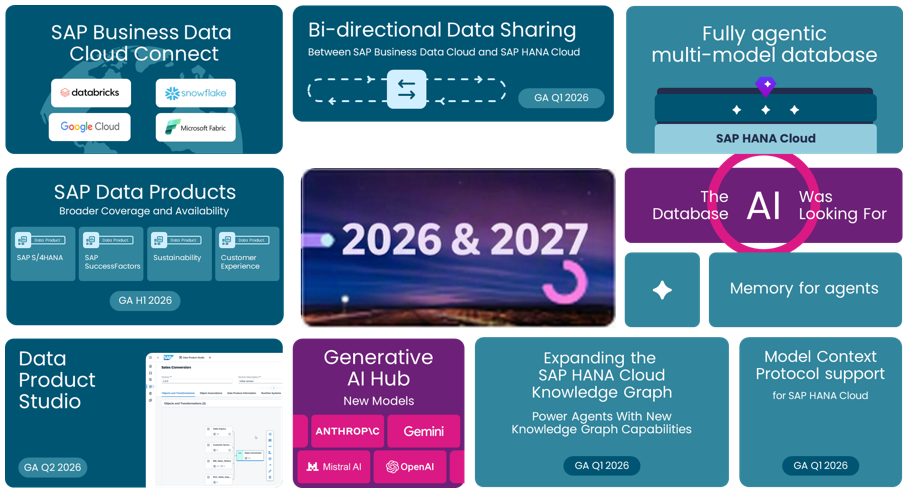
During a Data & Analytics Working Group session, directions were shared around Data Products, AI Hub, Data Product Studio, bidirectional integration with SAP Cloud and a multimodel database for AI agents.
These signals point to a broader shift: enterprise data is becoming both a reusable business product and the operational context for artificial intelligence.
Organisations should assess these capabilities through two lenses. First, their actual maturity and availability. Second, their fit with the organisation’s architecture, regulatory obligations and use cases. A vendor roadmap provides direction, an enterprise roadmap must reflect internal priorities.
An executive agenda for the next steps
Which business decisions require more accessible or consistent data?
Which existing assets should be retained, integrated or evolved?
Which AI use cases already have trusted data and clear ownership?
How will consumption, cost, security and quality be controlled throughout the transition?
Which internal and external capabilities will be needed to sustain the new operating model?
Data architecture is now a business decision
SAP Business Data Cloud reflects the direction of SAP’s data strategy, but its significance extends beyond technology. Value emerges when the organisation uses this convergence to reduce silos, preserve business context and connect analytics and AI to specific decisions.
The priority is not to migrate as quickly as possible. It is to build a transition that is understandable, governed and measurable. Organisations that organise their data assets, clarify responsibilities and prioritise use cases will be better prepared to benefit from new capabilities across the SAP ecosystem.
Ready to turn your data strategy into a practical roadmap for SAP Business Data Cloud? Let’s explore the right path for your organisation.

