
Real-World Examples
The 5 Decisions Behind Successful Migrations
Remain
Which workloads are working well & don't need to move today?
Connect
Which systems simply need to feed data into the new platform?
Consolidate
Which duplicated platforms can be brought together?
Retire
Which workloads no longer deliver business value?
MIGRATE
Which workloads should move, and in what order?
Most legacy estates are a mix of all five. Treating migration as one big switch-flip is the most common reason these programs blow their timeline and budget.
Proof That It Works at Scale
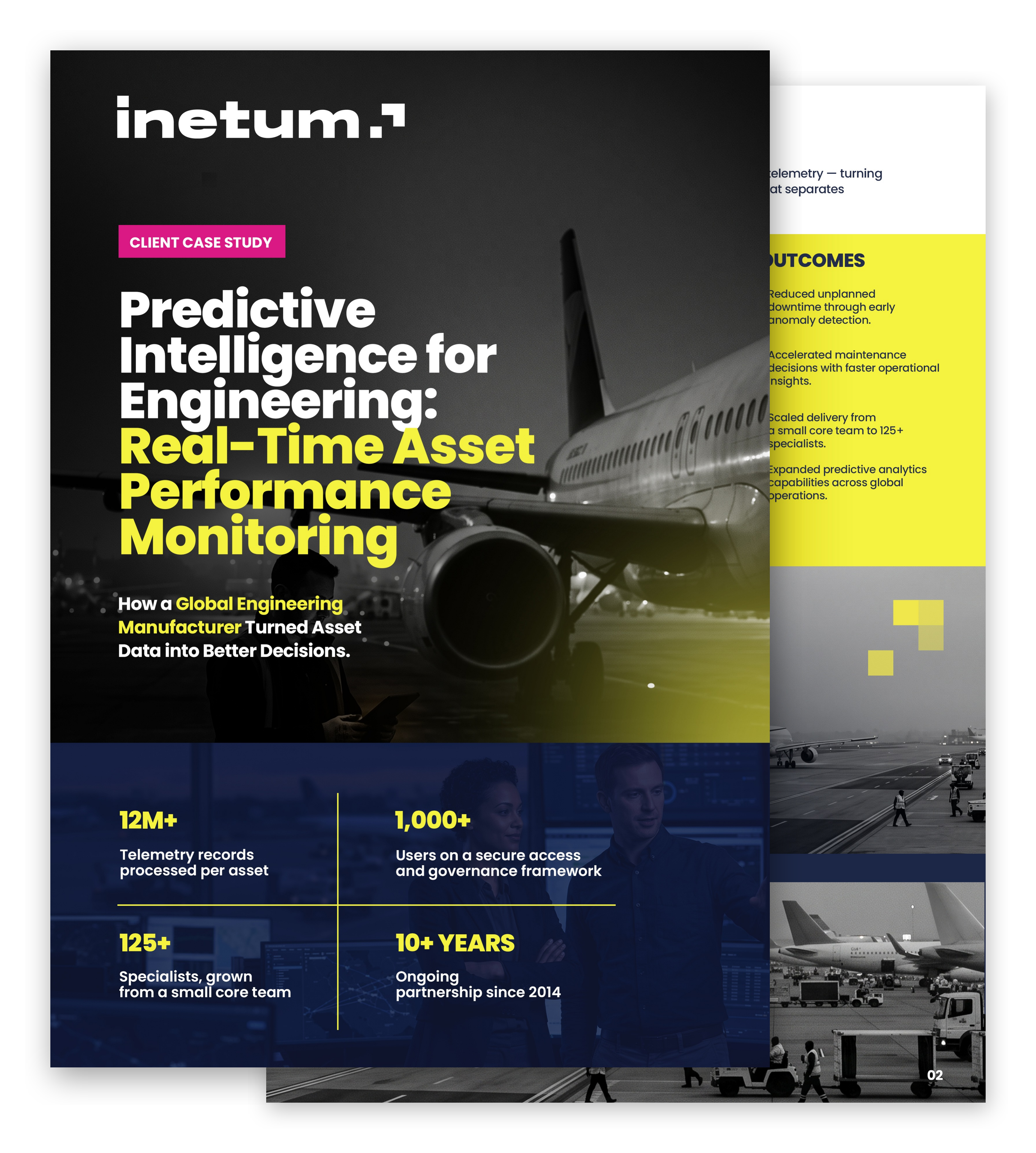
Legacy platform modernization for a global engineering manufacturer.
Proof Point
- 12M+ Telemetry records processed per asset
- 1,000+ Users on secure access and governance framework
- 125+ Specialists, grown from a small core team
- 10+ Years Ongoing partnership since 2014
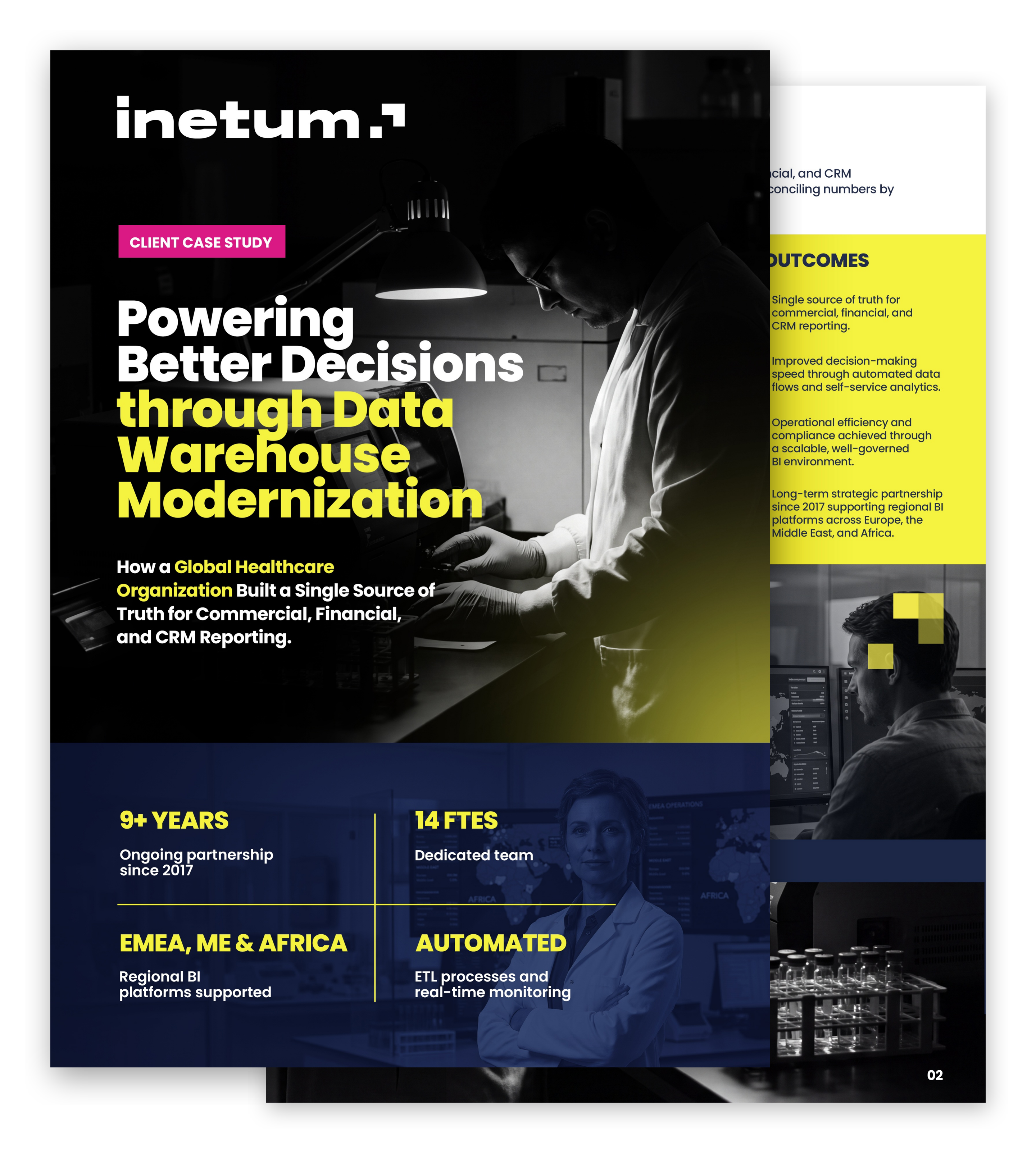
Enterprise data warehouse modernization for a global healthcare organization.
Proof Point
- 9+ Years Ongoing partnership since 2017
- 14 FTEs Dedicated team
- EMEA, ME & Africa Regional BI platforms supported
- Automated ETL processes and real-time monitoring
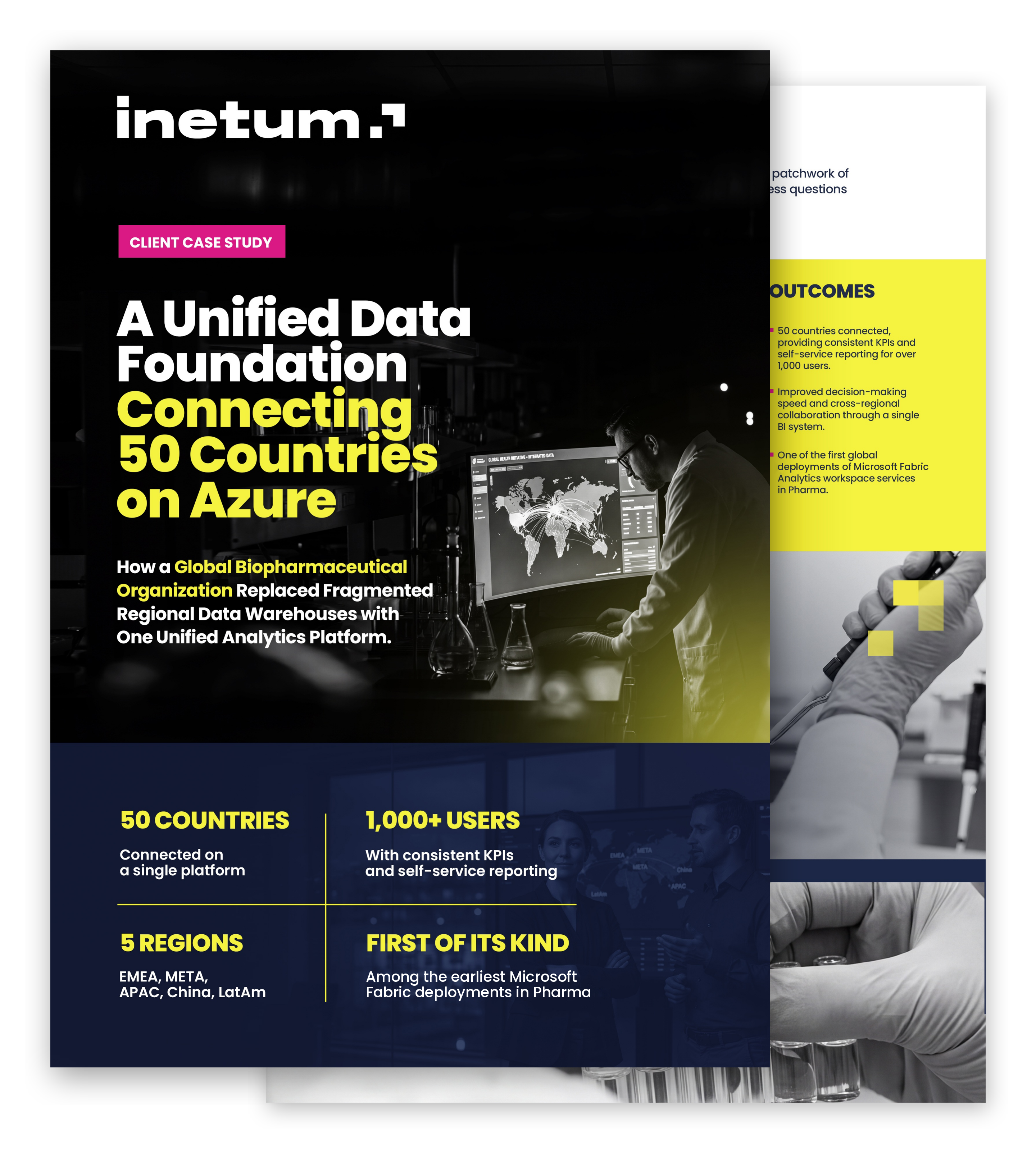
Azure data migration across 50 countries for a global biopharmaceutical organization
Proof Point
- 50 Countries Connected on a single platform
- 1,000+ Users Consistent KPIs and self-service reporting
- 5 Regions EMEA, META, APAC, China, LatAm
- First of Its Kind Among the earliest Microsoft Fabric deployments in Pharma
From predictive maintenance platforms and enterprise reporting environments to global Azure data foundations, these deployments demonstrate how complex data estates can be modernized without a disruptive system-by-system replacement.
If you have any questions about the case studies and our Data & AI expertise,
please contact marketing.growingmarkets@inetum.com