
Telecom: Turning AI Hype Into Revenue
Deep Dive: Five Keynotes, One Pattern
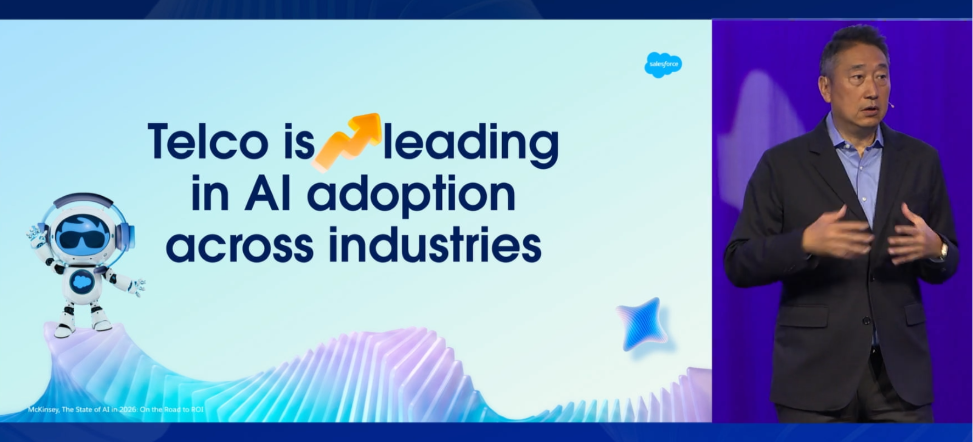
The SVP of Communications, Media, and Energy at Salesforce opened with an industry scoreboard: the industry growth has moved from 1% two years ago to nearly 5% today, still, in his words, just the beginning. Twenty-two of the world's 25 largest telcos now partner with Salesforce.
AT&T described a 20-year partnership now running at a different speed: 130,000 employees and 100 million subscribers, 750,000 daily contact center calls with AI-driven containment, and a retail transformation, from idea to a live production store, delivered in ten weeks using headless CRM, Data Cloud, and Agentforce, a process that previously took over two years
"We did something in two months that has previously taken over two years." — John Miller, VP of Consumer and Business Solutions, AT&T
KPN described a transaction resolved through Agentforce costing less than 3% of the company's average benchmark cost, freeing human agents for complex cases, alongside roughly five new agents launched in a single quarter for KPN's B2B business.
Telstra described a five-year simplification that cut the product catalogue from 1,800 to 20 products, underpinning four consecutive years of earnings growth, a return on invested capital that has climbed to 9%, and the highest customer satisfaction scores in the company's history.
At Inetum, AT&T's ten-week retail rebuild and Telstra's catalogue simplification are the same lesson Inetum applies with European telecom and utilities clients: agentic value compounds only after legacy complexity is deliberately reduced, not layered around.
Field Service: Unleashing Human Expertise
The EVP and GM of Field Service opened with the scale of the platform: 2 billion work orders created, 8 billion assets managed, 75 million appointments generated every month, and half a million AI-written pre-work briefs already helping technicians prepare before they arrive on site. Scheduling Agent 2.0 was framed against a striking possibility: fully agentic scheduling across those 75 million monthly appointments could save 6 billion minutes a month, on the order of 11,000 years of time returned to customers and staff.
Senski, a lawn and pest control company operating across 17 U.S. states and Canada with over 1,000 field technicians, described moving from a largely manual routing process capped near 20 stops per technician per day to 45 to 55 stops per route on Salesforce. In the three months after a deeper partnership with Salesforce's engineering team, stops per day rose a further 25% and revenue rose 33%, with speed-to-lead on new sales opportunities falling from weeks to single-digit minutes.
"Our metric in our case was, can we reduce our stop duration by two minutes. That's it. If we can do that, we would achieve all of our goals." — Nate Hurst, CEO, Senski
Slack: The Front Door to the Agentic Enterprise
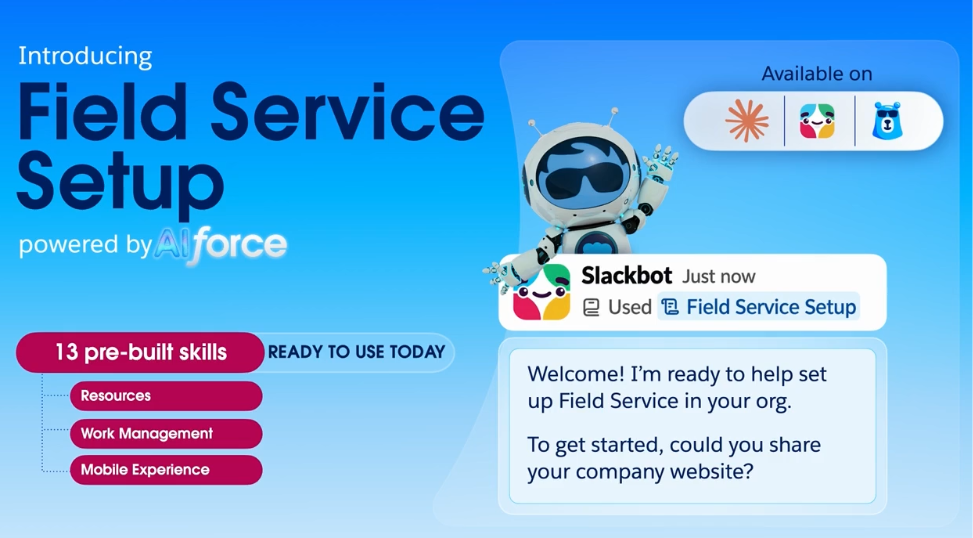
The EVP and GM of Slack reported that Slack is now Salesforce's fastest-growing product: users and agents together send over a billion messages a day, more than the daily volume on X. Slack has added over 100,000 new customers this year, 1.5 million people connect through Slack's MCP server weekly, and 1.5 million people use Slackbot every month.
The most striking data point came from Anthropic. Boris Cherny, Head of Claude Code, said 90% of the code his own team writes happens directly inside Slack, with Claude joining public channels unprompted to help debug and design, a workflow he said took roughly six months of model improvement to become genuinely reliable.
"The thing I would ask is remove features, get things out of the way, because unshipping is often harder than building." — Boris Cherny, Head of Claude Code, Anthropic
Salesforce's own sellers now use Salesforce almost entirely through Slackbot: 90% never leave the flow of work to log into the core application. Stripe's John Williams described over 1,300 account channels, 3,900 sellers, and 62,000 messages sent to Slackbot every week as central to how the company runs enterprise sales. NuBank reported saving a million work hours company-wide per year through Slackbot, with its most engaged users saving 20 hours a week.
A new capability, Slack Code, launched weeks ago with Anthropic, OpenAI, GitHub, Vercel, and Cognition, lets non-engineers direct coding agents like Devin inside a shared "code channel," reviewed and shipped without ever leaving Slack.
Marketing: A New Model for Growth
The SVP of Marketing Cloud at Salesforce, opened with a personal example: using Claude to help plan his own wedding, not by returning links but by returning an answer, framing the session's central argument that answer engines, not search engines, are now the first brand touchpoint for a growing share of consumer journeys. Salesforce's own data showed a majority of relevant searches increasingly resolving through AI answer engines rather than traditional search, with brand sentiment and share of voice inside those answers becoming a new, largely unmanaged marketing surface.
Formula One Management, represented by Matt Kemp, Head of Customer Data, was cited as an example of using Data Cloud to personalize campaign content at scale across a global fan base. Contentful, newly part of the Salesforce portfolio, showed an AEO, or answer-engine-optimization, reporting capability, letting marketers see how their brand is represented inside AI-generated answers and take action to correct misrepresentation.
Retail: Winning the AI-Powered Shopping Era
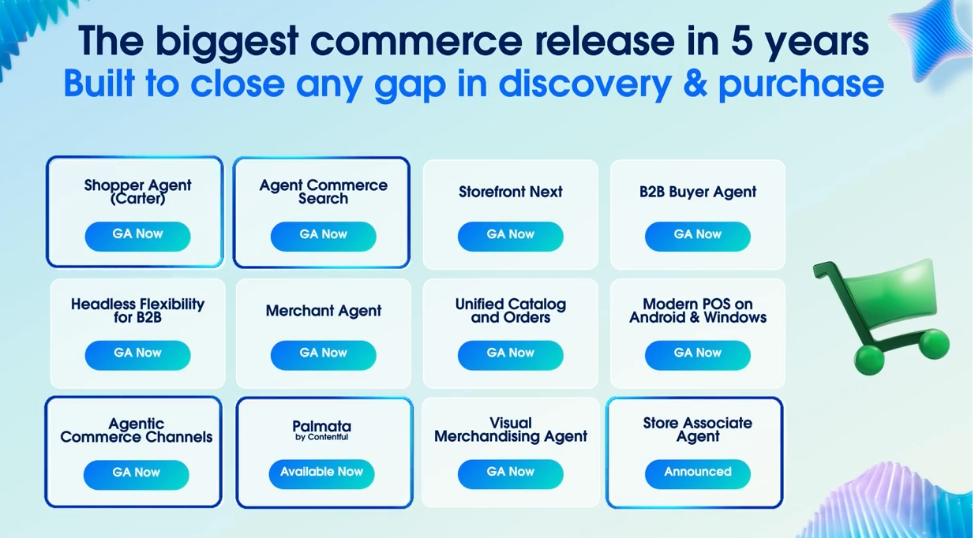
Michelle Collins, VP Solution Engineering, framed Salesforce as "doubling down" on retail, citing recent acquisitions including Simulate, Contentful, and Fin, and more commerce-portfolio innovation this year than in the previous five combined. The session named three pressures reshaping the industry at once: margin compression, consumers shifting to value-led purchasing, and AI increasingly mediating how consumers discover and evaluate brands before they ever reach a retailer's own site.
Lowe's described unifying customer signals across channels to personalize outreach at scale, citing 200% year-over-year growth in a key discovery metric alongside millions of personalized email sends generated automatically from unified customer context.
At Inetum, Lowe's channel-unification story is the same Data Cloud plus Commerce Cloud sequencing Inetum recommends to European retail clients facing the identical AI-mediated discovery shift.
Takeaways for enterprise leaders
For CTOs & CIOs, Day Three reinforced a pattern seen across every function: agentic AI only scales once legacy complexity is removed first. AT&T, Telstra, and DIRECTV each simplified a core system or catalogue before layering on agents, not after, and Slack's emergence as the "front door" to Salesforce shows the same principle applied to interfaces, meet your employees inside the tools they already use rather than asking them to adopt new ones.
For Sales & Marketing Leaders, the ground is shifting beneath traditional discovery. With answer engines increasingly mediating how customers find and evaluate brands, as shown in the Marketing and Retail keynotes, winning the AI-generated answer is becoming as important as winning the search result. Organizations like Lowe's and Formula One are already using unified customer context to personalize at scale, turning that shift into measurable engagement and revenue gains rather than a threat to manage.
For Operations Leaders, Day Three made clear that agentic value depends on the operational layer as much as the agents themselves. All point to the same discipline: deploying an agent is the easy part, and the sustained ROI comes from the same rigor DevOps once brought to cloud infrastructure, applied now to agents.
Dreamforce 2026 Day 3 Closing Summary
Across the deep-dive sessions one structure repeated without exception:
1. Reduce complexity before adding agents. AT&T, Telstra, DIRECTV, and Lowe's each simplified a legacy system or catalogue first; the AI gains followed, not the reverse.
2. Meet people where they already work. Slack, headless field service tools, and natural-language admin builders all point the same direction: agents succeed inside existing workflows, not new ones bolted alongside them.
3. Every function is becoming an agentic function. Telecom, field service, admin, marketing, and retail all showed the identical deploy, simplify, and govern pattern first proven in Sales and Service earlier in the week.
Dreamforce 2026 ultimately delivered a clear message: enterprise AI success is not determined by the AI model alone, but by the combination of intelligence, trusted business data, governance, and operational discipline.
Across every keynote, Data Cloud emerged as the critical foundation that enables AI agents to reason and act with the full context of the business. At the same time, Slack demonstrated how Agentic Enterprise becomes real by bringing AI directly into the flow of work, where employees already collaborate and make decisions.
The result is a new enterprise model where every function can become agentic, provided simplicity, trusted data, and governance come first.
Across three days, one message remained constant: AI creates value when intelligence, data, governance, and human expertise work together.
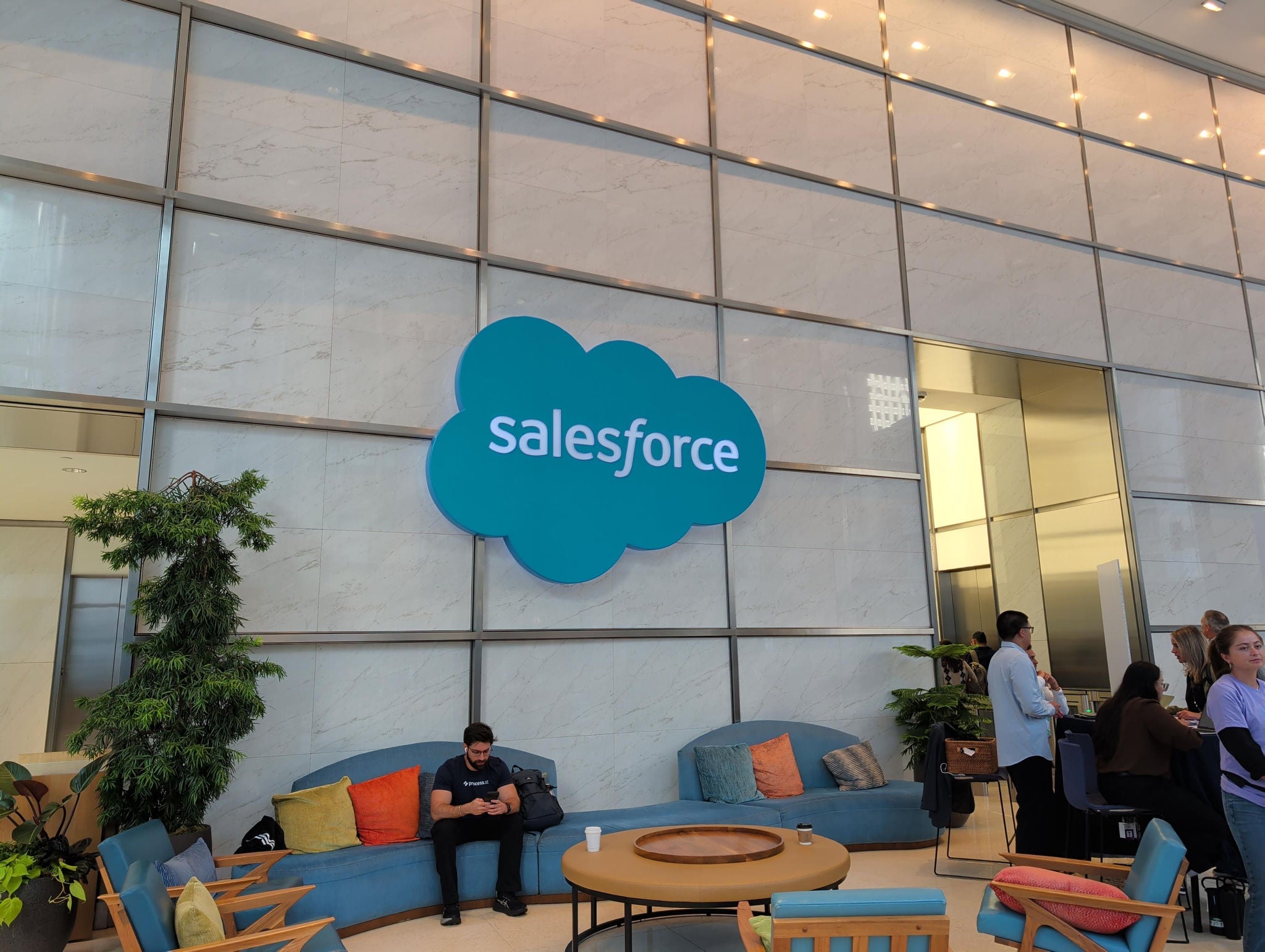
For Inetum, the biggest lesson from Dreamforce 2026 is simple: the future belongs not to the organizations with the most AI models, but to those that connect AI with trusted data, business context, governance, and measurable business outcomes. See you next year, Dreamforce!